Fishing and Moon Phase
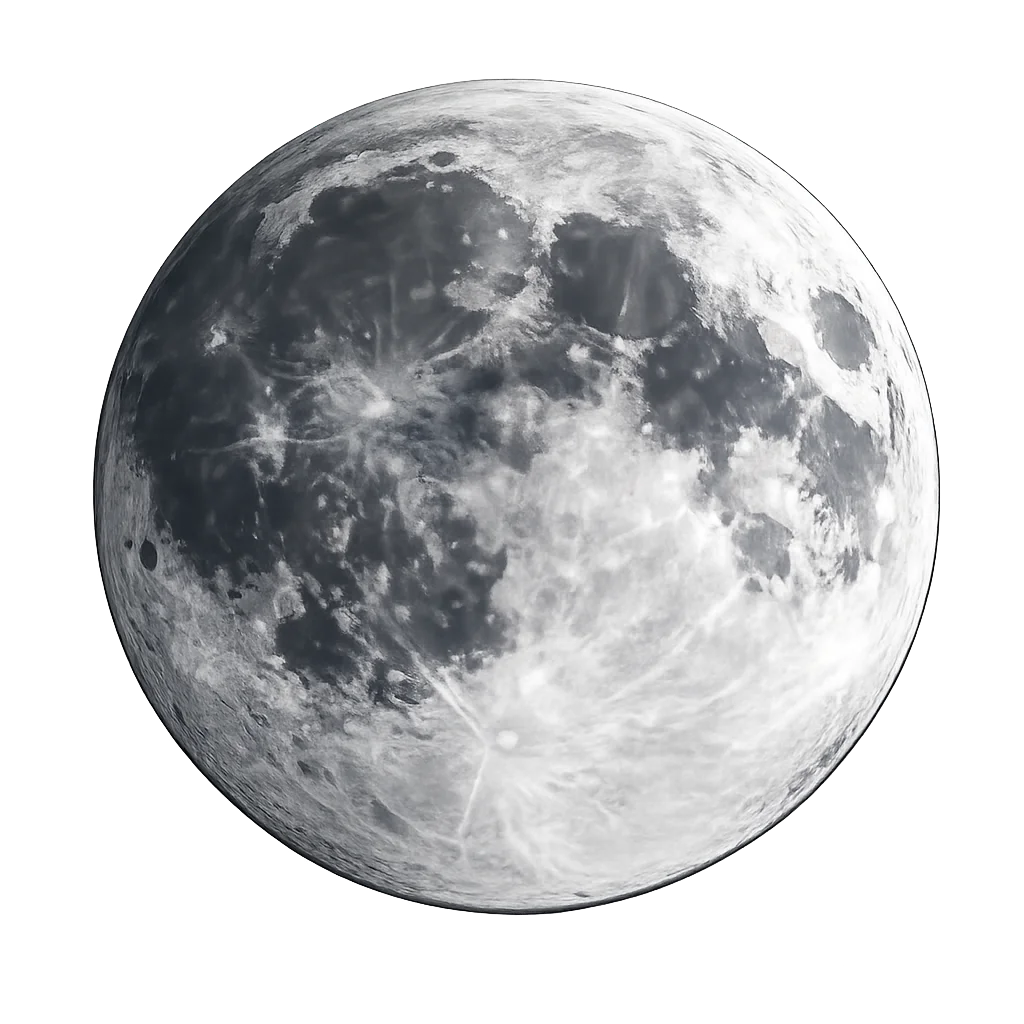
🌕 Full Moon
Lunar Age: 15.2 days
Next Spring Tide
Thu, 13 Aug 2026
14.3 days away
Next Neap Tide
Wed, 5 Aug 2026
6.9 days away
🌙 Moonlight
🟨🟨🟨🟨🟨🟨🟨🟨 100%
🌊 Tidal Current
🟦️🟦️🟦️🟦️🟦️🟦️🟦️🟦️ Extreme
🐟 Pelagic Fish Activity
★★★★★ Excellent
⚓ Bottom Fishing
★★★★★ Fair
🎯 Ease of Fishing
★★★★★ Challenging
🎣 Overall Fishing Expectation
★★★★★ Good
- 🐟 Pelagic fish: Excellent activity with abundant bait movement.
- ⚓ Bottom fishing: Challenging in shallow water due to excessive current.
- 🏖 Beach and jetty fishing: Often excellent around high tide.
- 🚤 Deep offshore: Productive with heavy tackle and experienced boat handling.
- 🌿 Estuaries: Highly variable as strong tidal flow interacts with river discharge.
- ✅ Best for: Pelagic fishing using live bait, trolling, casting and deep-water techniques.
Why Tidal Current Matters?
The Moon influences fishing primarily through changes in tidal currents, which strongly affect fish behaviour, feeding activity, and bait movement. Experienced anglers often consider tidal current to be one of the most important factors affecting fishing success, especially in the sea, estuaries, and large lakes.A moderate tidal current improves fishing in several ways. It keeps bait moving naturally instead of lying motionless on the seabed, carries bait scent over a greater distance, and transports plankton that attract baitfish and the larger predators that feed on them. For many species, an increasing tidal current signals favourable feeding conditions.
Current that is too strong, however, can also reduce fishing success. Heavy flow makes it difficult to keep bait in the strike zone, often requiring heavier sinkers that reduce bite sensitivity. Strong currents also disperse bait scent more quickly, carry drifting debris, and may cause fish to shelter behind reefs, rocks, or other structures where the current is weaker.
For this reason, the best Moon phase for fishing depends on the target species and fishing method rather than simply choosing a New Moon or Full Moon. Bottom fishing is often most productive during moderate tidal currents, which usually occur between neap and spring tides. Fast-swimming pelagic species such as tuna, Spanish mackerel, and trevally often become more active during the stronger currents associated with spring tides. In contrast, anglers fishing estuaries and tidal rivers may prefer the gentler currents found closer to neap tides.
Understanding how Moon phases, tides, and tidal currents work together allows anglers to choose fishing dates that best match their target species, fishing location, and fishing method.
So what are spring tides and neap tides, and why do they produce different tidal currents?
Tides and Tidal Current
Tide is brought about by the Earth’s rotation, and attraction of the Sun and the orbiting Moon on the waters of the oceans. Although the Sun and Moon both exert gravitational force on the Earth, the Moon’s pull is stronger because the Moon is much closer to the Earth. When an area covered by the ocean faces the Moon, the Moon’s gravitational force on the water causes a high tide. At the same time the Moon’s orbital motion creates an outward inertial effect that contributes to a second tidal bulge on the opposite side of the Earth. As the Earth rotates, these areas move away from the Moon’s influence and the tide goes down.The movement of water brought about by the forces can be separated to vertical and horizontal movements. The vertical movement is called the tide and the horizontal movement the tidal current. When the tide is rising, the flow of the current is directed towards the high tide. This horizontal tidal current is called the flood current. When the tide is receding, the flow of the current is directed away from the low tide. This horizontal tidal current is called the ebb current. Between flood and ebb are slack water periods where there is little or no horizontal movement.
Moon Phases, Spring Tides and Neap Tides
Although the Sun is almost 390 times farther away from the Earth than the Moon, its high mass still affects the tides. The tide-generating force due to the Sun is approximately 46% as strong as the Moon. When the Sun, Moon and Earth are all lined up, the Sun reinforces the pulls of the Moon. The combined pulls cause the highest and lowest tides, called spring tides. Spring tides happen whenever there is a New Moon or a Full Moon. When the Moon is between Earth and the Sun, it is in the Sun’s shadow and appears dark. This is the New Moon. When Earth is between the Sun and the Moon, the Moon reflects sunlight. This is the Full Moon. The current is stronger due to the higher vertical difference between high and low tide (tidal range).In the period between the two spring tides, the Moon faces the Earth at a right angle to the Sun. This is the First Quarter and Last Quarter Moon. When this happens, the pull of the Sun partially offsets the pull of the Moon. This causes tides that are lower than usual. These tides are known as neap tides. The current is weaker due to the smaller tidal range. It takes the Moon about 29.5 days to complete its orbit around the Earth. This period is called a lunar month. So if the first day of the lunar calendar is a New Moon (spring tide), the 8th day will experience a neap tide and 15th a Full Moon (spring tide again).
The distance between the Sun and Earth is also changing throughout the year. Tidal ranges are particularly large close to the Equinoxes (21 March and 21 September) when the Sun is overhead at the equator.
The Lunar Day
The Moon advances about 12.2° in its orbit around the Earth each day. And because the Moon orbits in the same direction as Earth rotates, the Moon will not be directly overhead the same area again until 24 hours, 50 minutes and 28 seconds. This time is called a lunar day.The lunar day is important in fishing because it allows anglers to predict when periods of increased fish activity are likely to occur on the following day. For example, if the active bite time at a location starts at 4pm today, we can predict that tomorrow active bite time at the same location will start at about 5pm.
During a lunar day there are normally two high tides and two low tides (known as semidiurnal tides), although this is not true everywhere because of land configuration. Some locations experience one tide at one height and the second at a different height (mixed semidiurnal tides), and some locations have so much interference from land that they only experience one high tide and one low tide per day (diurnal tides). Shores around coastal islands and inlets where the water must funnel in through constrained waterways may experience delayed tides compared to open coasts.
Other Current Factors
Tidal current is also driven by several other factors. The depth of the water in the location determines how strong the current changes with the tides. In the deep ocean, tidal currents change relatively little, but they become much stronger near the coast.Storm surge resulting from an intense storm also includes the rise in water level due to atmospheric pressure reduction as well as that due to wind stress. Storm surges occurring during spring tides can produce exceptionally strong currents.
Actual tidal current can also deviate from the tide prediction due to weather conditions. Winds drive currents that are at or near the ocean's surface. Another factor that drives currents is thermohaline circulation, a process driven by density differences in water due to temperature and salinity in different parts of the ocean. The currents caused by thermohaline circulation move much slower than the tidal or surface currents.