Billfish: Black Marlin
Black Marlin (Istiompax indica) are among the world's largest pelagic billfishes of the family Istiophoridae, found throughout tropical and subtropical waters of the Indian and Pacific Oceans. They are renowned for their immense strength, explosive speed and endurance when hooked, making them one of the world's premier game fishes. Sometimes referred to as the "bull of the sea", they can reach at least 4.5 m in total length and exceed 700 kg in weight.
Black Marlin are recognised by their dark blue upper body, silvery-white underside and rigid pectoral fins that cannot be folded flat against the body, a unique feature to Black Marlin. They possess two dorsal fins, two anal fins, a lunate caudal fin, two strong keels on each side of the caudal peduncle, and are the only living billfishes in which the second dorsal fin originates ahead of the second anal fin.

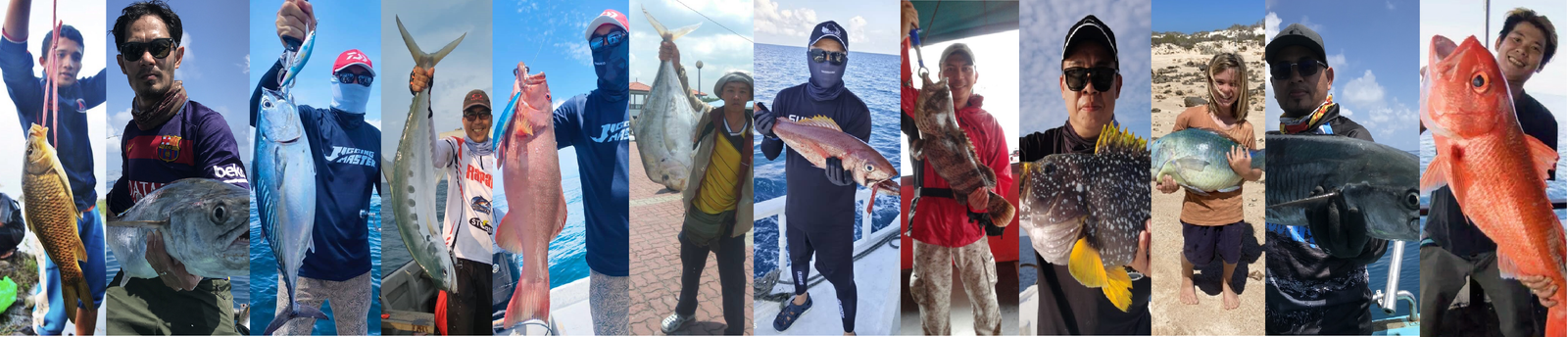
Black Marlin are often confused with Blue Marlin (Makaira nigricans) and Striped Marlin (Kajikia audax). They differ by having rigid pectoral fins that cannot be folded against the body, whereas the pectoral fins of Blue Marlin and Striped Marlin fold flat. Black Marlin also generally lack the prominent vertical body bars characteristic of Striped Marlin.
Black Marlin are highly migratory apex predators inhabiting offshore tropical and subtropical waters. Unlike many other marlins, they are frequently associated with continental shelves, reefs and islands rather than the open ocean. Sport fishing records indicate a preferred water temperature of approximately 25–27°C. Most individuals remain near the surface but regularly dive to depths exceeding 100 m while hunting. They feed mainly on fishes, squids and crustaceans. Stomach-content analyses indicate that they use their elongated bill to slash or stun prey before swallowing it whole.
Black Marlin are one of the world's most highly prized game fishes. The current IGFA all-tackle world record is a fish weighing 707.61 kg, caught off Cabo Blanco, Peru, in 1953.
Other names for the fish:
Sort marlin, Merlín negro, Picudo negro, Saku vorowaqa, Mustamarliini, Tonki, Tadamasa, Marlin nero, Kurokawa, Shirokajiki, Ikan Mersuji hitam, Puoh hu, Tumbuk banir, Varé, Marlin negro, Taguraar, Zwarte marlijn, Taketonga, Aguja negra, Svart marlin, Kheil al bahar, Bwagilium, Malasugi, Dol-lakak, Malakay, Malasugue, Espadim negro, Espadim petro, Sere bristyi marlin, Sa’ula-oso, Daanbeeri, Swart marlin, Ahin kopparsa, Dhappara, Ghappara, Kalu koppara, Makara, Saparava