Butterfly Rays (Gymnuridae)
Butterfly rays (family Gymnuridae) are marine rays recognised by their extremely broad wing-like pectoral discs and remarkably short whip-like tails. They occur throughout tropical and warm-temperate coastal waters worldwide, inhabiting sandy and muddy bottoms in shallow seas, estuaries and continental shelves. Their disc is much wider than it is long, giving them the appearance of a butterfly with outstretched wings.
Butterfly rays are slow-moving bottom-dwelling rays that usually rest partially buried in sand or mud. Their broad pectoral fins allow them to glide gracefully over the seabed while searching for prey.
Butterfly rays feed mainly on bottom-dwelling fishes, shrimps, crabs, bivalves and other invertebrates. They often pin prey against the seabed with their broad discs before swallowing or crushing it with their powerful jaws. Like other rays, they are viviparous, giving birth to live young after the embryos develop inside the mother.
The family Gymnuridae contains a single genus, Gymnura, with about 17 recognised species worldwide. Four species have been recorded from Malaysian waters.
Butterfly rays are slow-moving bottom-dwelling rays that usually rest partially buried in sand or mud. Their broad pectoral fins allow them to glide gracefully over the seabed while searching for prey.
Butterfly rays feed mainly on bottom-dwelling fishes, shrimps, crabs, bivalves and other invertebrates. They often pin prey against the seabed with their broad discs before swallowing or crushing it with their powerful jaws. Like other rays, they are viviparous, giving birth to live young after the embryos develop inside the mother.
The family Gymnuridae contains a single genus, Gymnura, with about 17 recognised species worldwide. Four species have been recorded from Malaysian waters.
Scientific Name: Gymnura micrura (Bloch & Schneider, 1801)
English Name: Smooth Butterfly Ray, Short-tailed Butterfly Ray, Diamond Skate
Chinese Name | 鱼类中文名: 魟鱼 (Hōng yú), 魔鬼鱼 (Móguǐ yú), 小尾燕魟 (Xiǎo wěi yàn hóng)
Malay Name | Nama Melayu Malaysia: Ikan Pari Kelawar, Pari Temirka, Pari Tembikar, Pari-kelawar Licin
Local Hokkien: Hung Heur
Local Teochew: Hung Hu
Size: Maximum disc width 137 cm, common disc width 90 cm.
Main Identification Features: Extremely broad diamond-shaped disc with a very short tail. Lacks a venomous tail spine. Snout slightly projecting. Disc margins deeply concave near the head. Tail with low dorsal and ventral fin folds and 3–4 dark crossbands. Upper surface grey, brown or olive, sometimes with faint rounded spots.
Habitat and Ecology: Coastal waters, estuaries, lagoons and shallow sandy or muddy bottoms to about 40 m depth. Feeds mainly on fishes, shrimps and bivalves.


Scientific Name: Gymnura poecilura (Shaw, 1804)
English Name: Long-tailed Butterfly Ray
Chinese Name | 鱼类中文名: 魟鱼 (Hōng yú), 魔鬼鱼 (Móguǐ yú), 花尾燕魟 (Huāwěi yàn hóng)
Malay Name | Nama Melayu Malaysia: Ikan Pari Kelawar, Pari Tembikar, Pari Kelawar Bintik
Thai Name | ชื่อสามัญภาษาไทย: ปลากระเบนผีเสื้อ (Plāk ra ben p̄hīs̄eụ̄̂x)
Size: Maximum total length at least 66 cm, maximum disc width at least 82 cm.
Main Identification Features: Broad butterfly-shaped disc with a long slender tail about equal to the body length. Tail lacks a venomous spine and usually bears about nine dark bands. Upper surface plain brown to olive, sometimes with faint pale spots.
Habitat and Ecology: Coastal sandy and muddy bottoms in shallow inshore waters to about 30 m depth. Feeds mainly on fishes, crustaceans and molluscs.
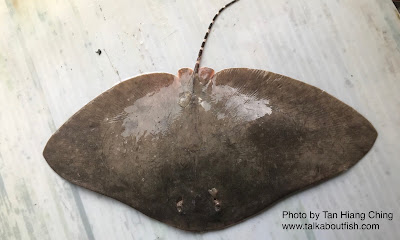
English Name: Smooth Butterfly Ray, Short-tailed Butterfly Ray, Diamond Skate
Chinese Name | 鱼类中文名: 魟鱼 (Hōng yú), 魔鬼鱼 (Móguǐ yú), 小尾燕魟 (Xiǎo wěi yàn hóng)
Malay Name | Nama Melayu Malaysia: Ikan Pari Kelawar, Pari Temirka, Pari Tembikar, Pari-kelawar Licin
Local Hokkien: Hung Heur
Local Teochew: Hung Hu
Size: Maximum disc width 137 cm, common disc width 90 cm.
Main Identification Features: Extremely broad diamond-shaped disc with a very short tail. Lacks a venomous tail spine. Snout slightly projecting. Disc margins deeply concave near the head. Tail with low dorsal and ventral fin folds and 3–4 dark crossbands. Upper surface grey, brown or olive, sometimes with faint rounded spots.
Habitat and Ecology: Coastal waters, estuaries, lagoons and shallow sandy or muddy bottoms to about 40 m depth. Feeds mainly on fishes, shrimps and bivalves.

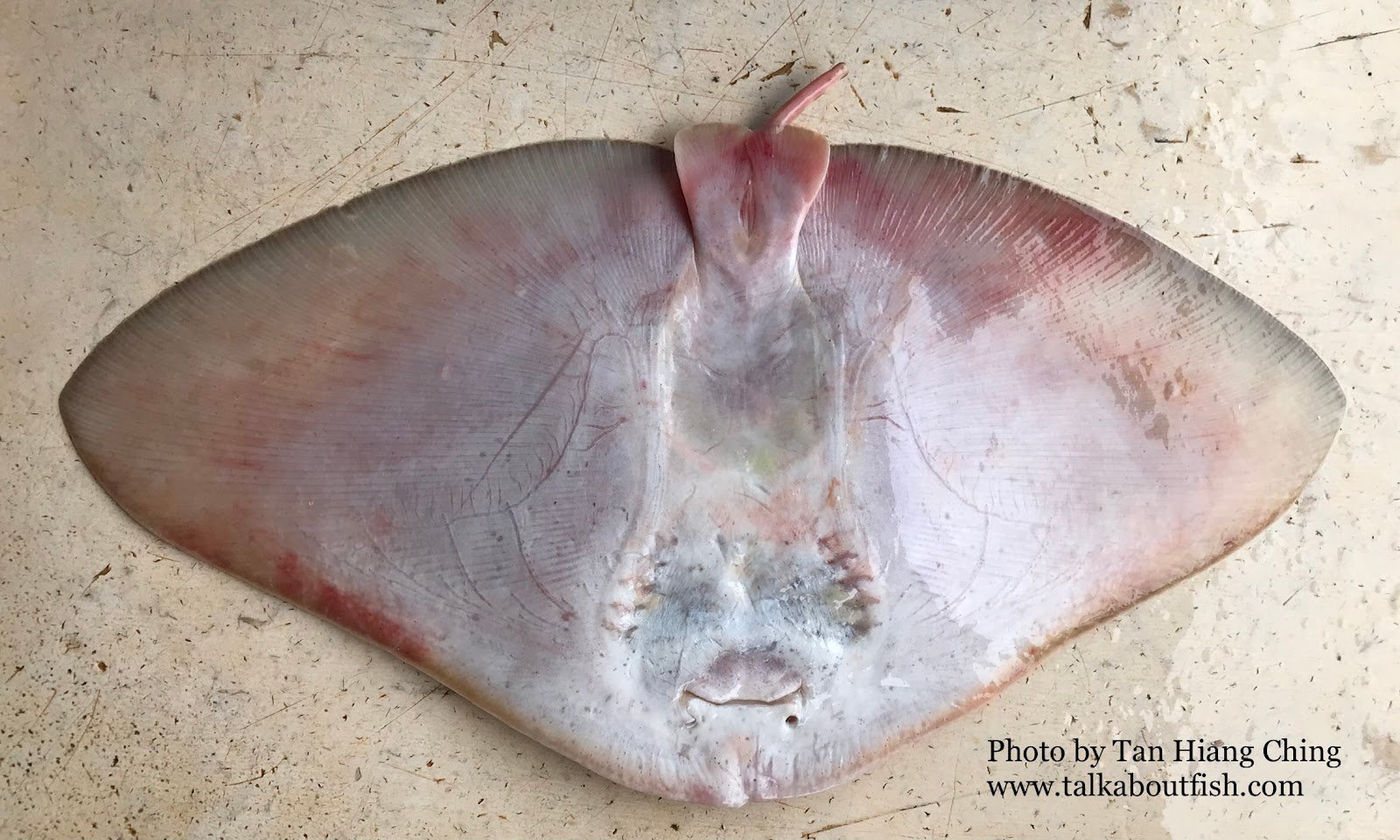
Scientific Name: Gymnura poecilura (Shaw, 1804)
English Name: Long-tailed Butterfly Ray
Chinese Name | 鱼类中文名: 魟鱼 (Hōng yú), 魔鬼鱼 (Móguǐ yú), 花尾燕魟 (Huāwěi yàn hóng)
Malay Name | Nama Melayu Malaysia: Ikan Pari Kelawar, Pari Tembikar, Pari Kelawar Bintik
Thai Name | ชื่อสามัญภาษาไทย: ปลากระเบนผีเสื้อ (Plāk ra ben p̄hīs̄eụ̄̂x)
Size: Maximum total length at least 66 cm, maximum disc width at least 82 cm.
Main Identification Features: Broad butterfly-shaped disc with a long slender tail about equal to the body length. Tail lacks a venomous spine and usually bears about nine dark bands. Upper surface plain brown to olive, sometimes with faint pale spots.
Habitat and Ecology: Coastal sandy and muddy bottoms in shallow inshore waters to about 30 m depth. Feeds mainly on fishes, crustaceans and molluscs.