Tuna: Yellowfin Tuna
Yellowfin Tuna (Thunnus albacares) are large, fast-swimming pelagic predatory fish found throughout tropical and subtropical oceans worldwide. Highly valued for their excellent table quality and fighting ability, they are among the most commercially and recreationally important tuna species.
Yellowfin Tuna can be recognized by their streamlined torpedo-shaped body and the bright yellow second dorsal and anal fins which become remarkably long in large adults. They are among the most colourful of all tunas, with a dark metallic blue back, silver belly and a golden yellow stripe running along the side of their body.
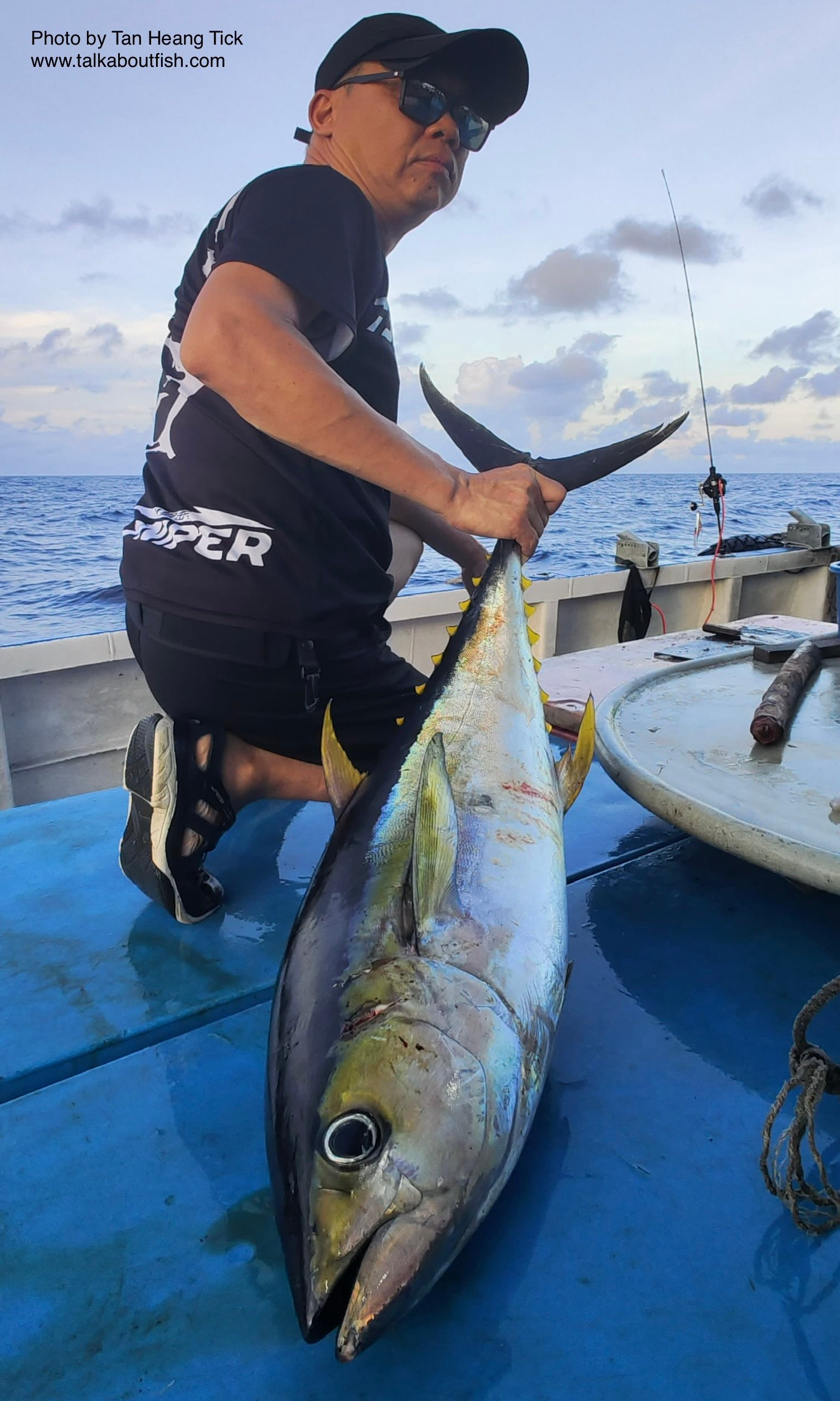

Yellowfin Tuna are highly migratory and inhabit the mixed surface layer of the ocean above the thermocline. Although they are capable of diving to considerable depths, they are usually found within the upper 100 meters of the water column and are sensitive to waters with low oxygen concentrations.
Like some shark species, Yellowfin Tuna must constantly swim to force water over their gills. They are among the fastest and most powerful open-ocean predators, feeding on fishes, squids and crustaceans.
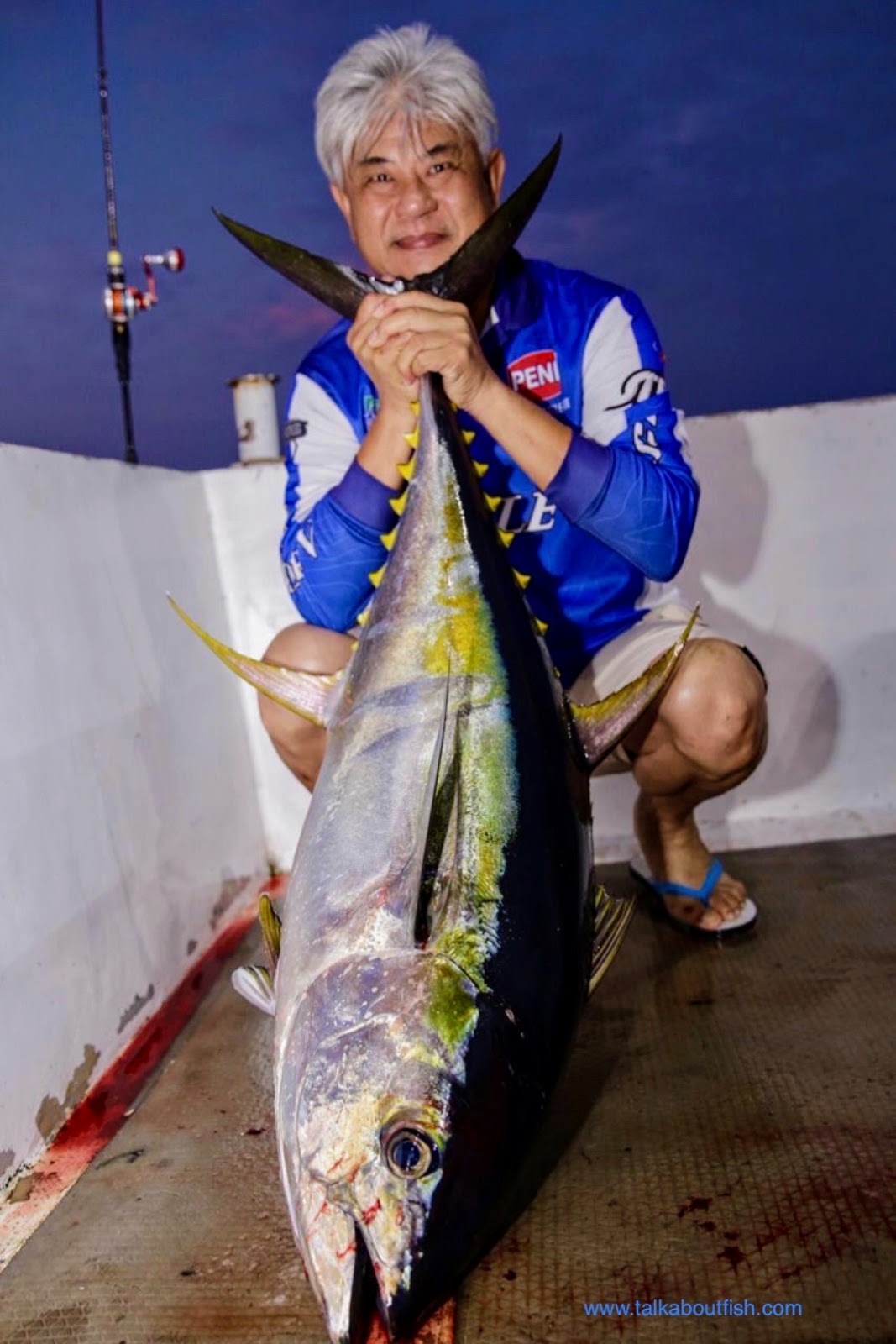
They can grow to over 2 meters in length and weight more than 190 kg. As of July 2019, the International Game Fish Association (IGFA) All Tackle Record for Yellowfin Tuna stands at 193.68 kg (427 lb) for a fish caught in 2012, 100 miles off Cabo San Lucas, Mexico.
Yellowfin Tuna often travel in schools with similarly sized companions. They sometimes school with other tuna species.
Though almost all fishes are cold-blooded, tunas in the genus Thunnus have the ability to maintain a body temperature significantly warmer than the surrounding seawater. Higher body temperatures allow them to use their muscles more efficiently, and therefore swim more quickly with relatively little expenditure of energy.
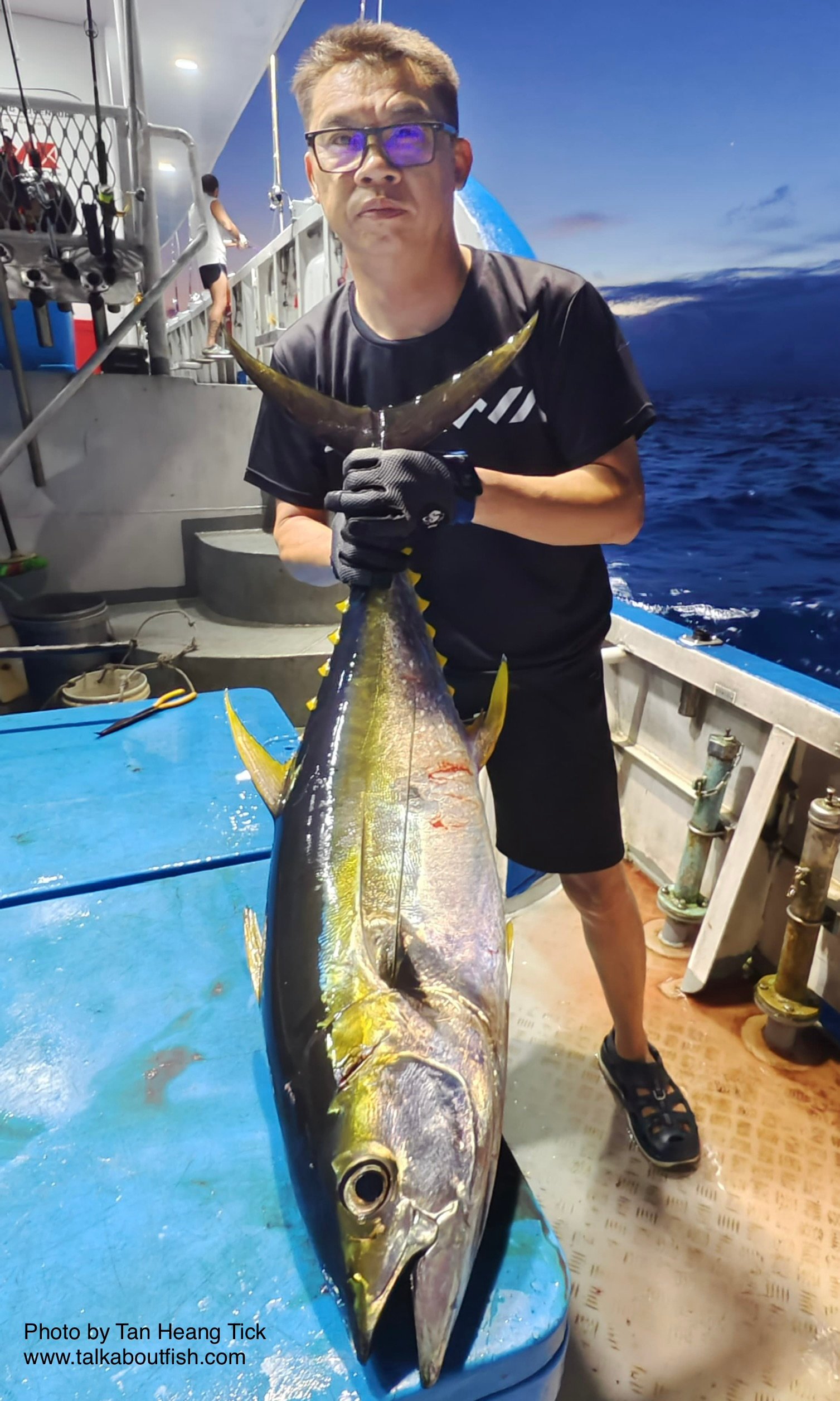
Yellowfin Tuna reproduce via broadcast spawning, where several females and several males release millions of eggs and sperm into the water column at the same time.
When they are newly hatched and no more than a few millimeters long, they are eaten by other fishes that specialize on eating plankton. Juveniles are preyed upon by other pelagic hunters, including larger tuna, seabirds, and predatory fishes such as wahoo, sharks, and billfishes. Within two years, individuals can reach about one meter in length and become sexually mature. Adult Yellowfin are among the top predators and not eaten by anything other than the largest and fastest hunters. They can only be threatened by the very largest billfishes, toothed whales particularly the false killer whale, and some open ocean shark species such as the mako and great white. They can eat just about anything that they can swallow; typically whole.