Pineconefishes (Pineapplefishes)
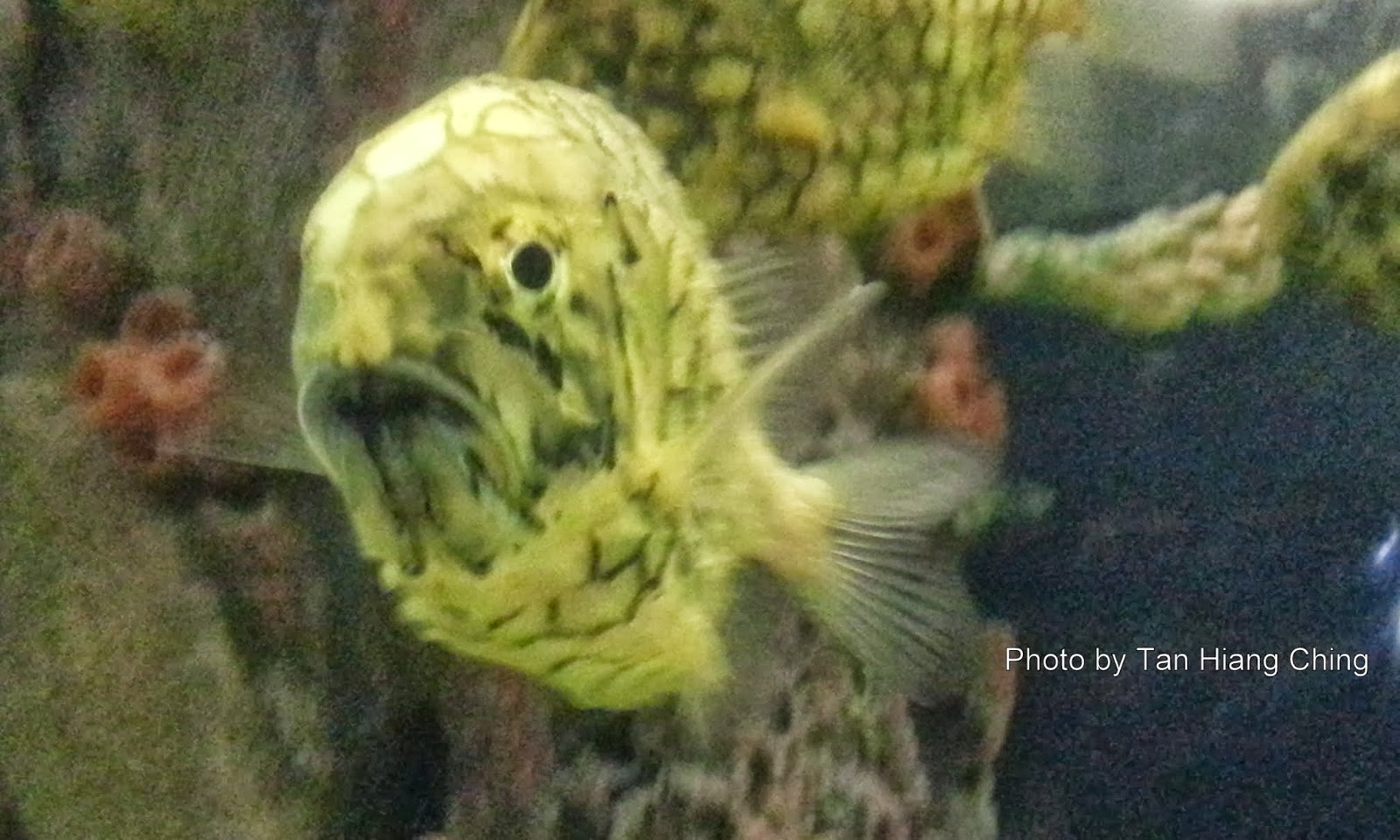
Pineconefishes (family Monocentridae) are marine fishes recognised by their large armour-like scales, occurring throughout the Indian and Pacific Oceans, where they inhabit rocky reefs and coral reefs. Pineconefishes are also known as pineapplefishes. They have rounded, laterally compressed bodies with stout dorsal and pelvic fin spines. Their bright yellow armour-like scales are separated by black margins, giving them their distinctive pinecone-like appearance.
One of their most distinctive features is a pair of light-producing organs beneath the lower jaw. These organs contain symbiotic bioluminescent bacteria that emit a constant greenish glow, which is believed to help the fishes locate prey and may also assist communication in darkness.
Pineconefishes are nocturnal, spending the day sheltering in caves and beneath rocky ledges before emerging at night to feed. Their diet consists mainly of small crustaceans, shrimps and other benthic invertebrates captured over sandy and rocky seabeds. They are usually encountered singly or in small groups.
The family comprises two genera and about four recognised species worldwide.
One of their most distinctive features is a pair of light-producing organs beneath the lower jaw. These organs contain symbiotic bioluminescent bacteria that emit a constant greenish glow, which is believed to help the fishes locate prey and may also assist communication in darkness.
Pineconefishes are nocturnal, spending the day sheltering in caves and beneath rocky ledges before emerging at night to feed. Their diet consists mainly of small crustaceans, shrimps and other benthic invertebrates captured over sandy and rocky seabeds. They are usually encountered singly or in small groups.
The family comprises two genera and about four recognised species worldwide.
Scientific Name: Monocentris japonica (Houttuyn, 1782)
English Name: Pineconefish, Japanese Pineapplefish
Chinese Name | 鱼类中文名: 松球鱼 (Sōng qiú yú)
Malay Name | Nama Melayu Malaysia: Ikan Nenas, Ikan Jepun, Setonggang
Thai Name | ชื่อสามัญภาษาไทย: ปลาสับปะรด (Plā s̄ạbpard)
Main Identification Features: Body, except for the caudal peduncle, covered with large armour-like non-overlapping scales (scutes), each bearing a central keel and posterior spine. Body bright yellow with black margins between the scales. Lower jaw black. A pair of light-producing organs containing bioluminescent bacteria is present on each side of the lower jaw.
Size: Maximum total length 17 cm.
Habitat and Ecology: Occurs on coral and rocky reefs at depths of about 20–250 m. A nocturnal species that shelters in caves and beneath rocky ledges during the day before emerging at night to forage over sandy bottoms. Feeds mainly on shrimps, small crustaceans and other benthic invertebrates.
Remarks: Popular in public aquaria because of its unusual armour-like appearance and naturally bioluminescent light organs.
English Name: Pineconefish, Japanese Pineapplefish
Chinese Name | 鱼类中文名: 松球鱼 (Sōng qiú yú)
Malay Name | Nama Melayu Malaysia: Ikan Nenas, Ikan Jepun, Setonggang
Thai Name | ชื่อสามัญภาษาไทย: ปลาสับปะรด (Plā s̄ạbpard)
Main Identification Features: Body, except for the caudal peduncle, covered with large armour-like non-overlapping scales (scutes), each bearing a central keel and posterior spine. Body bright yellow with black margins between the scales. Lower jaw black. A pair of light-producing organs containing bioluminescent bacteria is present on each side of the lower jaw.
Size: Maximum total length 17 cm.
Habitat and Ecology: Occurs on coral and rocky reefs at depths of about 20–250 m. A nocturnal species that shelters in caves and beneath rocky ledges during the day before emerging at night to forage over sandy bottoms. Feeds mainly on shrimps, small crustaceans and other benthic invertebrates.
Remarks: Popular in public aquaria because of its unusual armour-like appearance and naturally bioluminescent light organs.