Grouper: Highfin Coralgrouper
Highfin Coralgrouper (Plectropomus oligacanthus), also known as the Vermicular Coralgrouper, are large coral reef predators found throughout the tropical western Pacific Ocean. They belong to the grouper family (Serranidae) and are among the more uncommon coral groupers encountered by anglers and divers. Their dependence on healthy coral reef habitats and striking colouration make them one of the more distinctive coral groupers.
Highfin Coralgroupers can be recognised by their elongate and robust body, reddish-brown to bright red coloration, numerous blue spots on the body and fins, and distinctive blue horizontal or oblique lines on the head and upper body. Their soft dorsal and anal fin rays are elongated, giving rise to their common name.
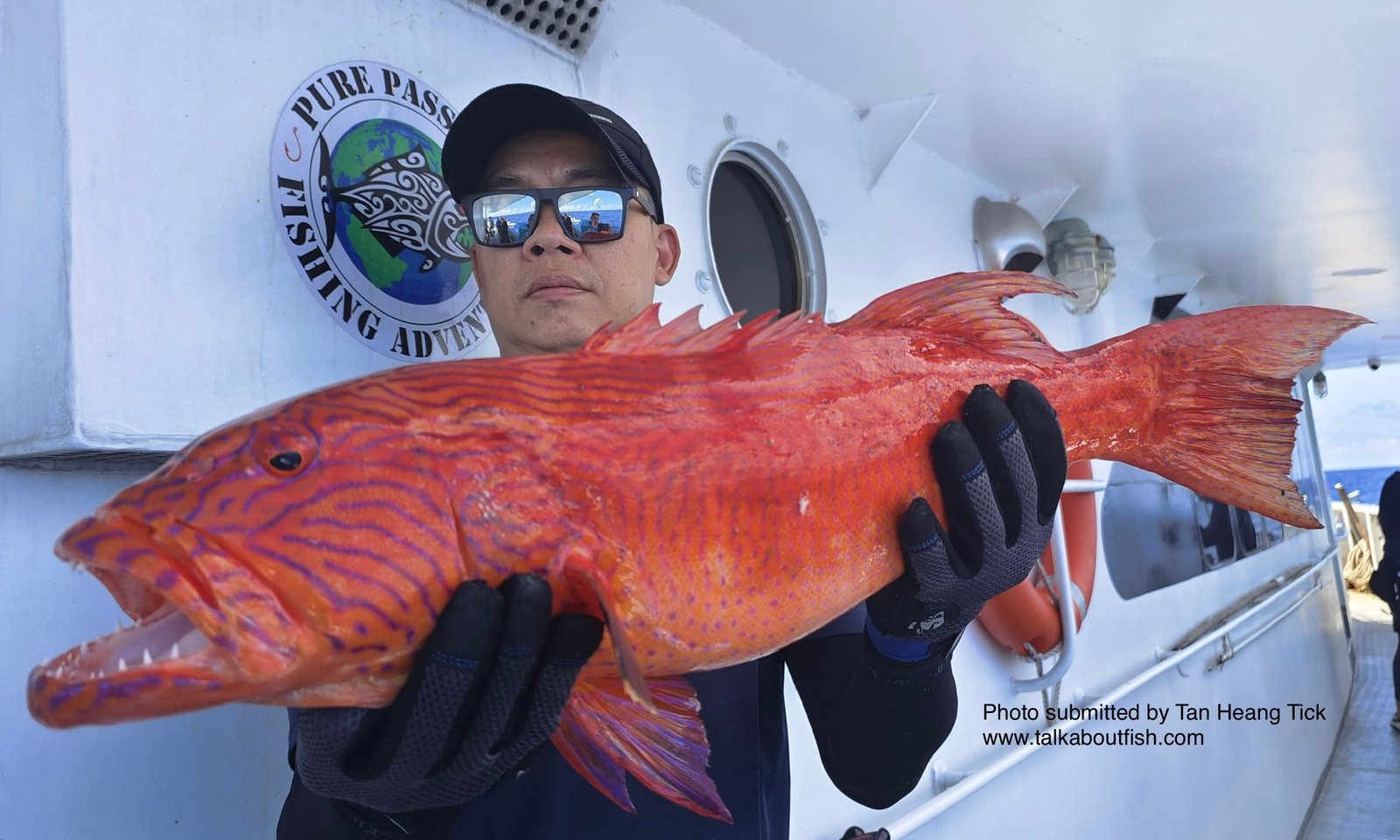
Unlike Leopard Coral Grouper (Plectropomus leopardus) and Squaretail Coral Grouper (Plectropomus areolatus), the blue markings on the body are often arranged as lines and dashes rather than evenly distributed spots. They may also superficially resemble the Red Sea subspecies of the Roving Coralgrouper (Plectropomus pessuliferus marisrubri), but differ in their more extensive vermicular blue markings and elongated fin rays.
Highfin Coralgroupers inhabit coral reefs, reef drop-offs and steep channel slopes at depths ranging from about 4 to 40 metres, although they have occasionally been recorded from deeper waters. They are highly dependent on good-quality coral reef habitats and are naturally uncommon throughout much of their geographical range.
Highfin Coralgroupers are predatory reef fishes that feed primarily on fishes and crustaceans. Unlike many large reef predators, they are occasionally observed foraging in small groups of two or three individuals over rocky and sandy reef habitats. They can attain a maximum total length of about 75 cm and are generally considered a minor component of reef fisheries, where they are usually caught incidentally rather than specifically targeted.